

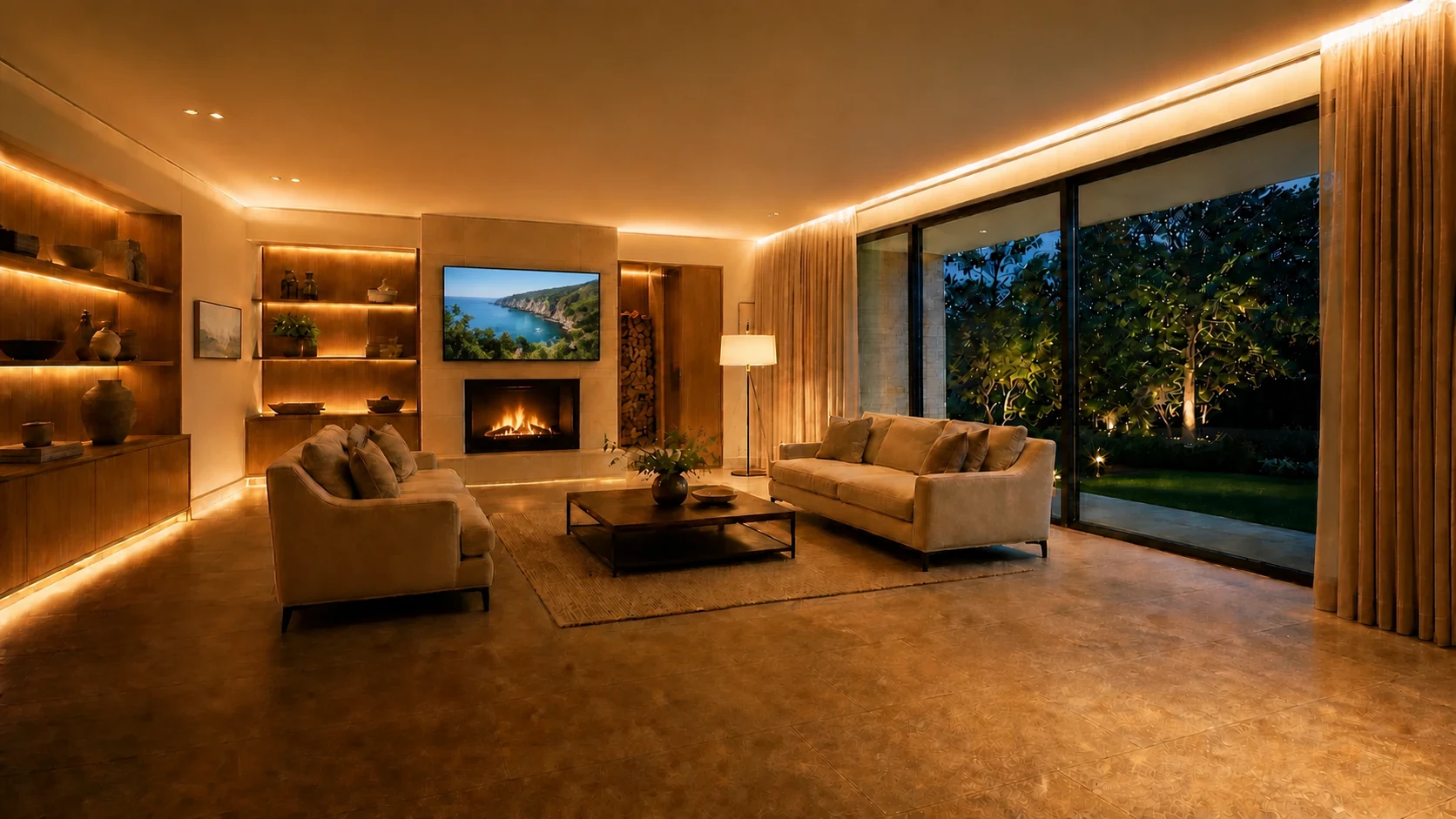
If switching a light means finding a phone, unlocking it and locating the correct app, the technology has added work to a simple task. Good automation uses the room, its sensors and familiar local controls first; the app becomes most valuable when you are away.
Sensors make the sensible first decision
Occupancy, light level, time, temperature and other useful conditions can help the home choose an appropriate starting point. That might mean gentle route lighting after dark, shading before direct sun overheats a room or heating that responds to genuine use rather than a rigid timetable.
Room controls remain essential
A fixed keypad, Rithum switch, HDL Tile or touchscreen is available to everybody in the room. It does not disappear into a pocket, run out of charge or require a guest to install an app.
- Obvious controls for common everyday actions
- Consistent operation from room to room
- Manual adjustment respected by the automatic profile
- Essential functions retained if another service is unavailable
Scenes coordinate rather than complicate
A single action can prepare lighting, media, sound, heating and shading together. The user chooses the outcome—such as Watch TV or Away—while the system handles the sequence behind it.
The phone still has an important role
Mobile control is excellent for checking the home while away, receiving an alert, answering the door remotely or making an occasional adjustment from another location. It works best as an additional interface rather than the foundation of every local interaction.