

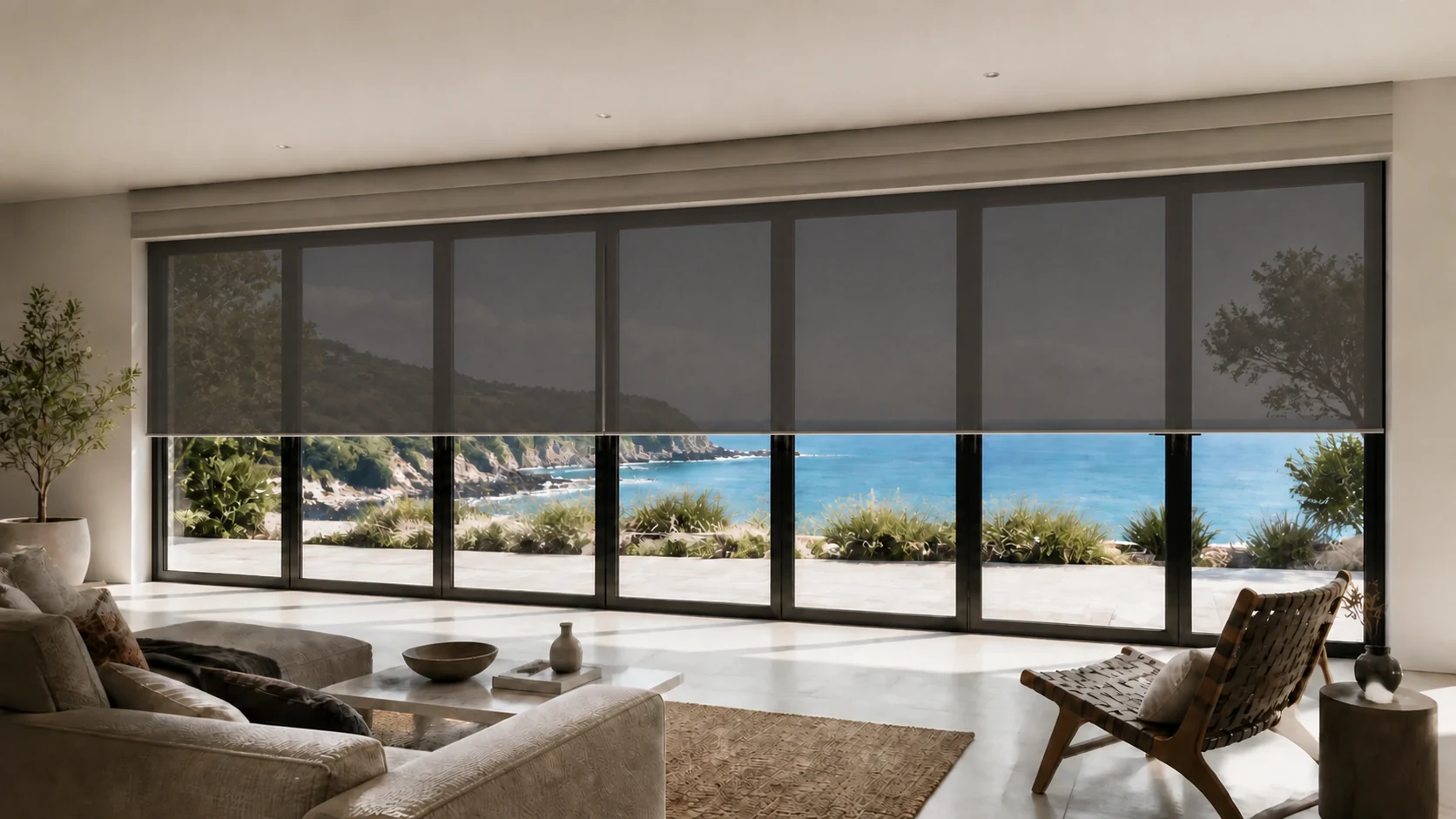
Automated shading is not simply a motor added for convenience. With the right fabric, survey and control strategy, blinds can respond to changing sunlight even when nobody is home—and work with the lighting to maintain a comfortable room.
Fabric determines what the blind can achieve
A sheer solar fabric can reduce glare and damaging solar effects while retaining an outward view. Blackout fabrics suit rooms where privacy or light exclusion matters more. Honeycomb construction can improve thermal performance and provide useful sound dampening, although it should not be described as soundproofing.
Automatic movement protects an empty room
Light, temperature, weather and occupancy information can help a control system decide when shading is useful. This protects flooring, furniture, artwork, carpets and upholstery from prolonged direct sunlight without relying on somebody remembering to lower every blind.
- Solar response based on the affected elevation
- Manual override whenever the occupant wants something different
- Sensible limits to avoid unnecessary movement
- Coordination with occupancy and time profiles
Lighting and shading can share one target
Instead of treating blinds and electric lighting separately, a control system can balance them around the required room light level. As daylight increases, shades can lower and lights dim; as conditions change, the process can reverse. Suitable tunable lighting can also follow the chosen colour-temperature profile.
Unusual windows need a proper survey
Large panes, gable glazing and roof windows need products designed around their geometry. Accurate measurement, suitable fabric support and clean alignment matter as much as the motor. Manual and powered blinds can also share fabrics so automation is used where it adds value rather than imposed on every window.